Energy AI moves from copilots to agents — and the accountability question gets real
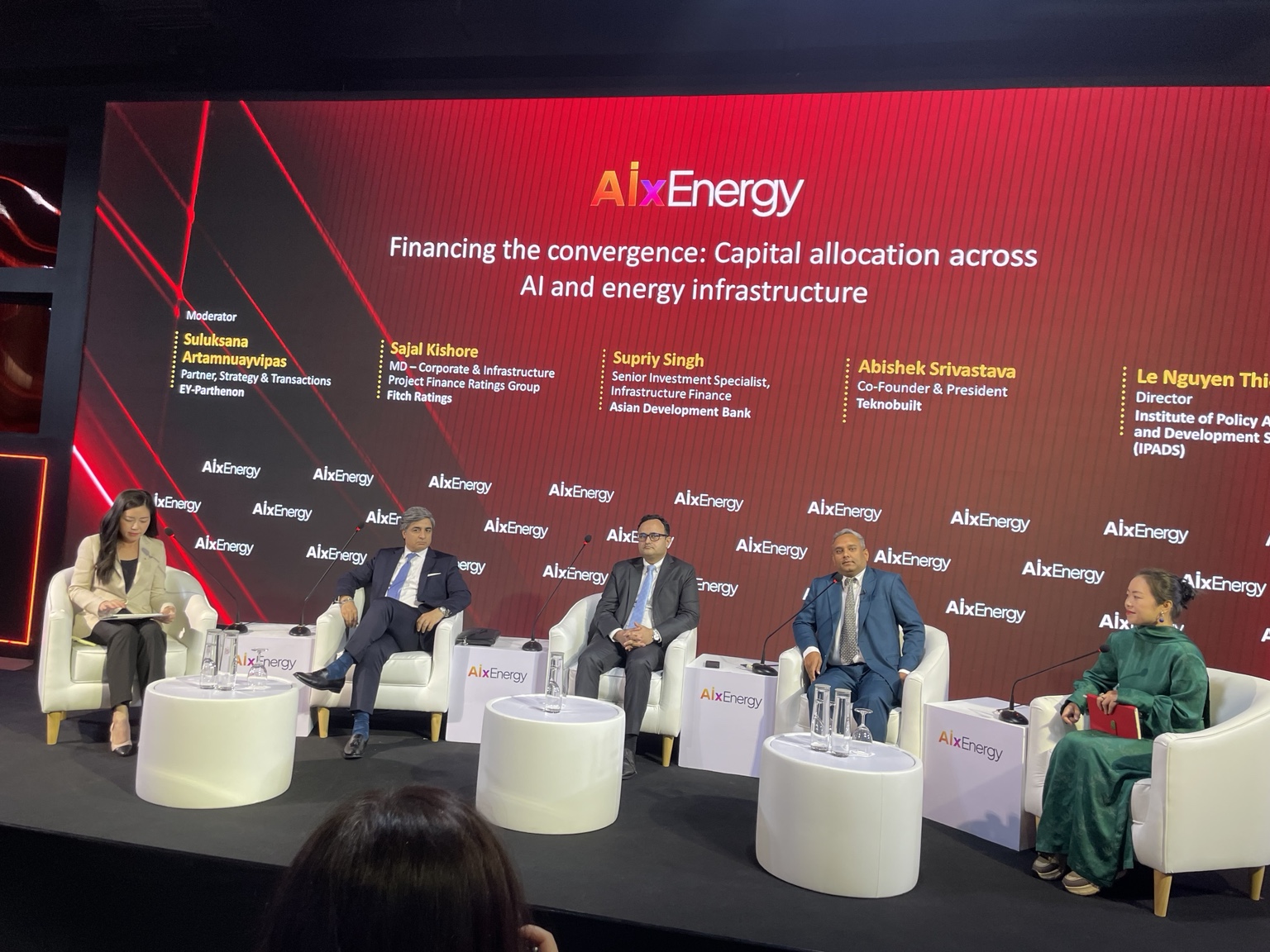
BANGKOK — The energy industry's AI debate is moving into a more consequential phase.
On the AixEnergy stage at Gastech today, a panel titled “Agentic AI: From pilot to the next era of energy autonomy” is examining the move from AI systems that assist people toward agents capable of interpreting industrial information, coordinating tasks and supporting increasingly autonomous decisions.
The panel brings together moderator Hanno Stegemann, Managing Director and Partner at BCG X; Wassim Ghadban, Senior Vice President, AI & Digital Engineering at Kent; Dan Jeavons, President of Applied Computing; Dr. Hengwei Liu, CTO and Head of Green Hydrogen at Wilson Engineering; and Jan Lower, Co-Founder and CEO of deeplify.




From demonstrations to operational responsibility
The important word in the session title is not AI. It is autonomy.
For years, much of industrial AI has been deployed as prediction, analytics, optimisation or decision support. Agentic systems raise a different set of questions because they can potentially assemble information from several sources, reason across a workflow and initiate or coordinate actions rather than simply return an answer.
In an energy environment, that changes the engineering problem. A useful agent must understand operating context, constraints, permissions and the consequences of being wrong. The closer AI gets to real assets and operational decisions, the more important explainability, cybersecurity, validation and human accountability become.
Kent's Gastech programme describes its work around autonomous engineering, digital twins and industrial AI. Ghadban has said the industry's AI conversation is shifting from what is possible to what is being deployed across engineering, operations and safety.
Industrial AI has to understand the plant
Applied Computing approaches the problem from another direction. Its President, Dan Jeavons, previously led global AI and data-science work at Shell. The company is developing Orbital, a foundation-model platform designed specifically for energy and industrial operations.
The distinction matters. Industrial facilities generate sensor histories, engineering diagrams, operator logs and process information that do not resemble the text corpus behind a general-purpose chatbot. Applied Computing says Orbital combines industrial context with physics and time-series information so AI can work with the underlying operating system rather than merely talk about it.
That points toward a much bigger transition. If AI can reliably understand the state of an asset, the next question is whether it can coordinate work around that asset.
The human does not disappear
The arrival of more autonomous software does not remove people from the equation. It makes the boundary between human and machine responsibility more important.
An operator needs to know why an action is being proposed. An engineer needs confidence that physical constraints have been respected. Management needs an audit trail showing what the system knew, what it decided and who authorised the resulting action.
This is also where technologies elsewhere on the Gastech floor begin to connect. Voice-first inspection systems can capture human observations at the asset. Sensors and control systems provide machine data. Engineering systems supply design context. Agentic AI potentially becomes the layer that can reason across all of them.
That is a more interesting proposition than another AI assistant. It is the beginning of a possible operating architecture in which field workers, engineers, industrial data and AI agents collaborate around the same physical system.
The question Gastech now has to answer
The technical race is moving quickly. The governance question cannot be left behind.
As agents progress from summarising information to recommending and coordinating action, energy companies will have to decide exactly where autonomy ends. Who can override an agent? Which decisions always require a human? How is an incorrect recommendation reconstructed afterwards? And when several agents interact, where does responsibility sit?
Those questions are no longer theoretical if the industry's ambition is genuinely to move from pilot projects to energy autonomy.
The Stratawire is reporting live from Gastech 2026 and the AixEnergy Theatre in Bangkok.