CSSC brings the scale of China’s shipbuilding industry to Bangkok
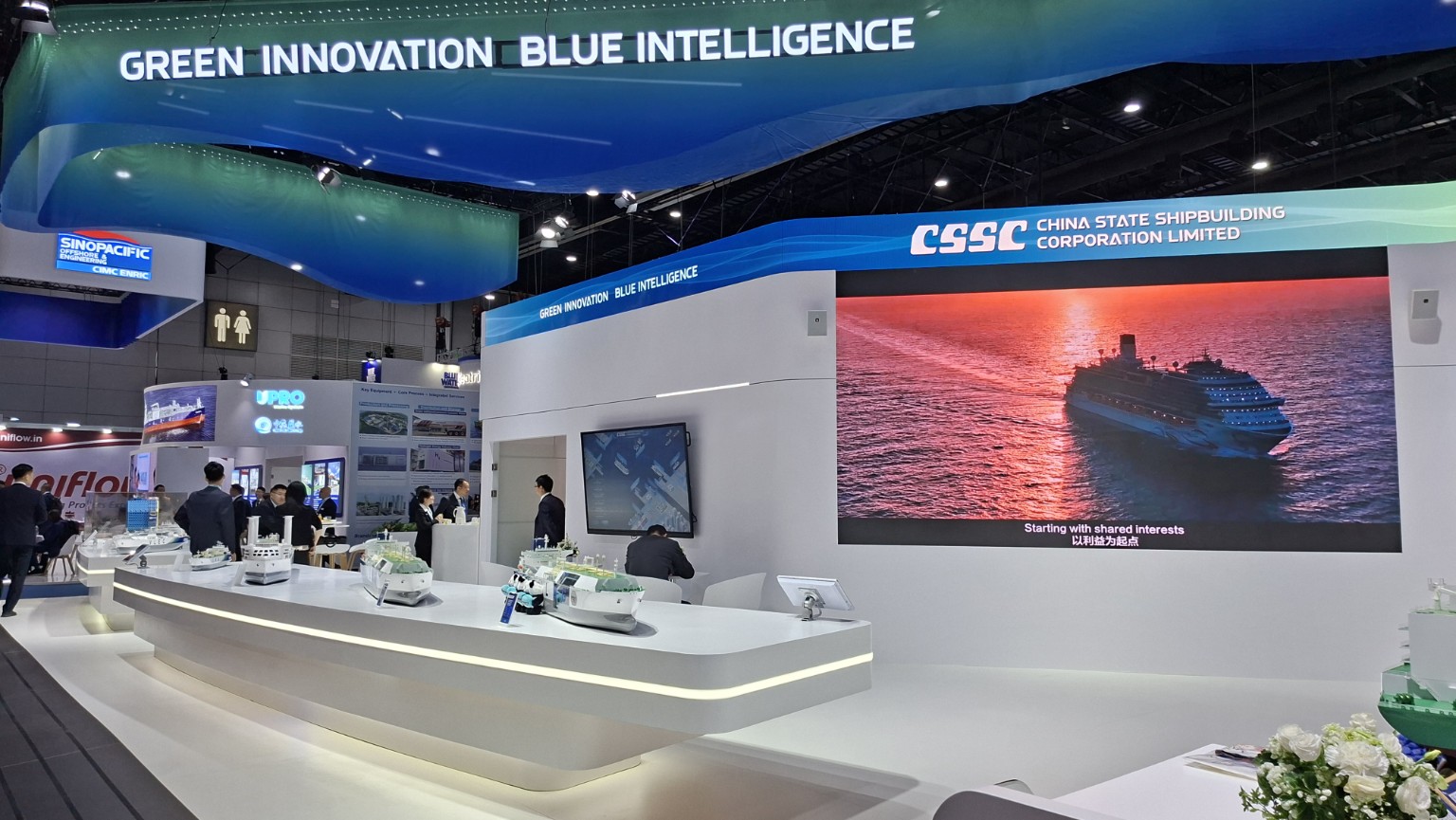
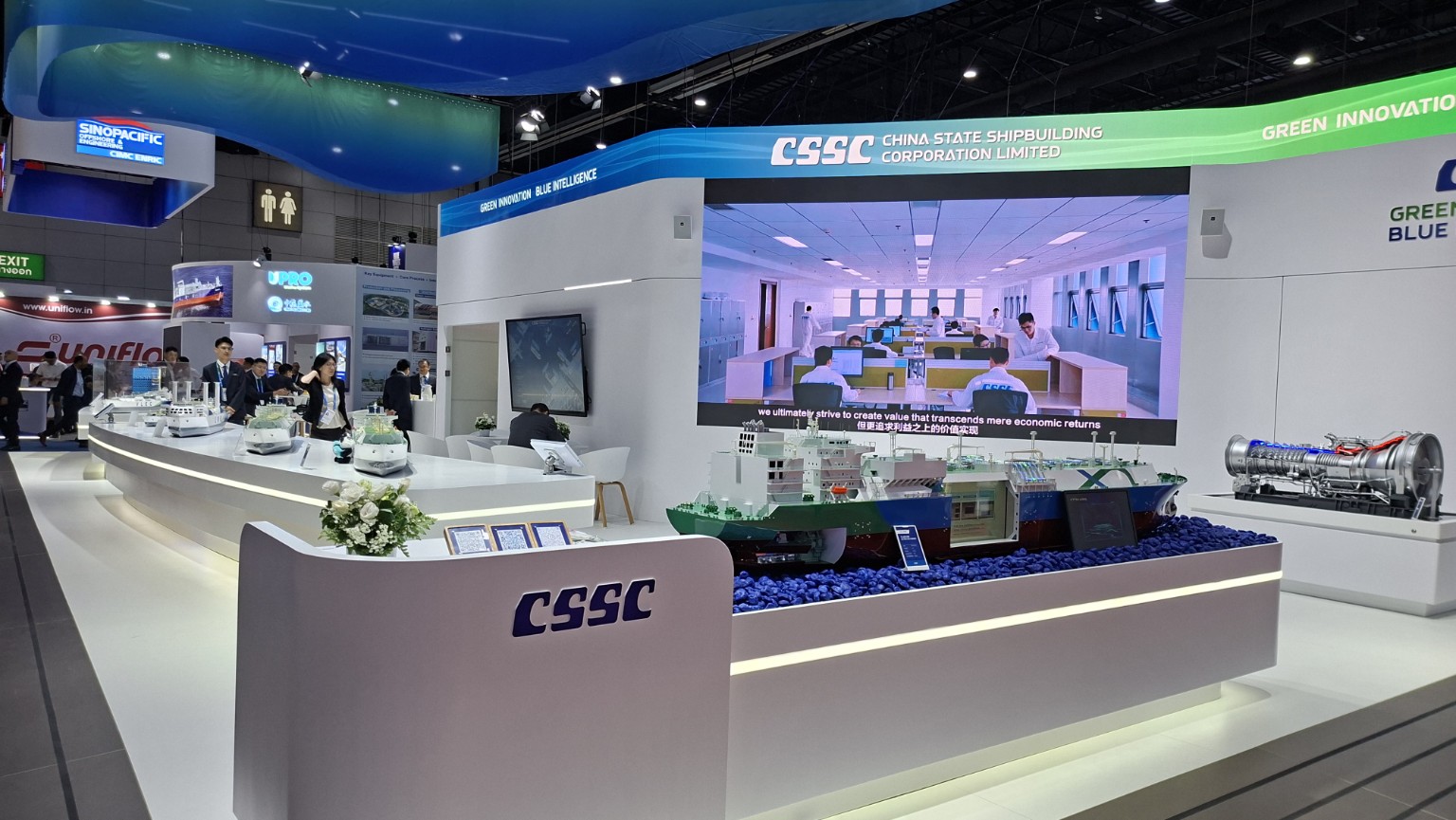
Walk past the China State Shipbuilding Corporation stand at Gastech and the first impression is scale. Ship models fill the counters, a vast screen runs through the group’s capabilities, and the words above it all read: “Green Innovation, Blue Intelligence”.
That pairing sums up one of shipping’s biggest challenges. Owners need vessels that can cut emissions, use fuel more efficiently and operate with better digital intelligence. They also need shipyards capable of turning new designs into working fleets, not one-off demonstrations.
The LNG carrier race is getting bigger
CSSC sits at the centre of China’s shipbuilding industry through a network of shipyards, equipment makers and design institutes. Its Hudong-Zhonghua yard is building QatarEnergy’s new QC-Max LNG carriers, ships with a capacity of 271,000 cubic metres. QatarEnergy has placed orders for 24 of the vessels, making the programme a striking example of how quickly the scale of LNG shipping is changing.
Those ships matter because the growth of LNG supply is inseparable from the vessels that move it. New liquefaction capacity can only reach customers if shipbuilding capacity, engines, containment systems and port infrastructure expand alongside it.
Green shipping still means difficult choices
The cleaner-shipping conversation is broader than LNG. Shipowners are weighing methanol, ammonia, biofuels, electrification and efficiency improvements, often without knowing which fuel will be available at the right price over a vessel’s working life.
That uncertainty is pushing shipbuilders towards flexibility. Dual-fuel engines, fuel-ready designs and smarter energy-management systems offer owners room to adapt, but every option brings its own questions around cost, safety, storage and infrastructure.
CSSC’s stand makes a confident case for technology and scale. The more difficult test comes after the exhibition: whether the industry can build cleaner vessels quickly enough while keeping them safe, commercially workable and supplied with genuinely lower-carbon fuel.
The bigger picture
Gastech may be rooted in gas and LNG, but the shipping hall shows how far the conversation now reaches. The energy transition does not stop at the production plant or export terminal. It continues across oceans, through engines, fuel tanks, shipyards and the decisions being made today about vessels that could still be operating decades from now.
The Stratawire is reporting from Gastech 2026 in Bangkok.